The Making of Products: Behind the Scenes of Product Development
Oct 22, 2026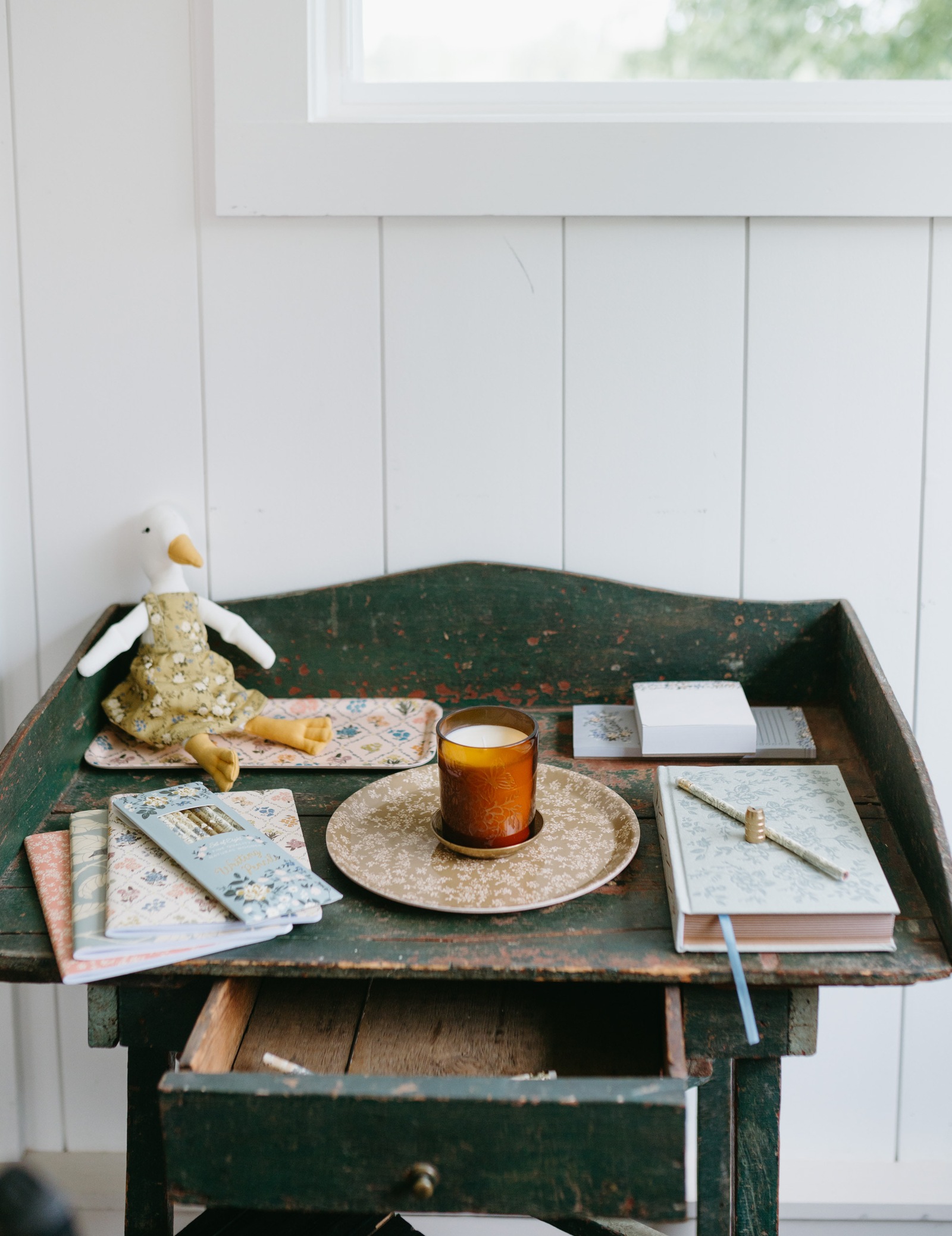
By: Bonnie Christine
Story Adapted From Pattern Magazine – Volume 4
Pattern Magazine is Bonnie Christine's quarterly print and digital publication for surface pattern designers, artists, and creative entrepreneurs who believe that how you live shapes what you make. This story first appeared in Volume 4, Expansion & Exposure, the spring 2026 issue.
Behind the scenes of product development.
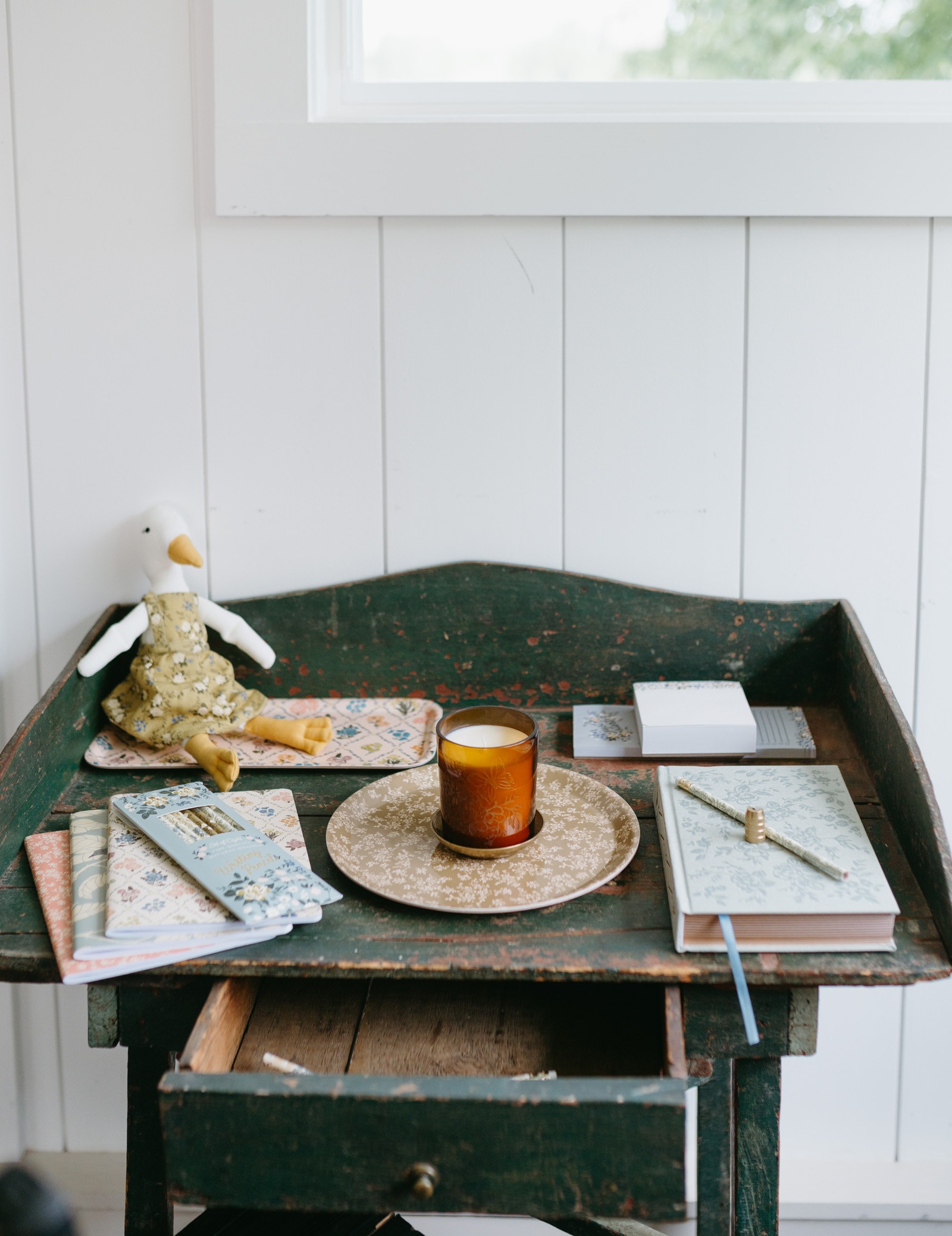
You step into a new shop, a local boutique filled with handcrafted treasures. Pottery lines one wall, and wallpaper lines the other. Wooden tables overflowing with patterned giftwrap, candles, and elegant notebooks fill the room. It’s warm, inviting, and personal.
The shop owner shares that the products are hand-designed with each detail carefully chosen from the initial pencil sketch to completion. And you wonder, “What does that process look like? How do you create a product from a simple drawing?”
We asked these same questions when we first decided to launch our own shop, Flowerie. And while we’re still learning the ins and outs of product development, we’ve tucked away a few insights we’d love to share with you.
Perhaps you’re an artist looking to create your own product line, or a curious consumer eager to learn the stories products hold.
Here is a behind-the-scenes glimpse into our Flowerie product development process from selecting color palettes and fabric samples to testing prototypes and finessing packaging. Use this process as a starting point for your own product journey ... or simply as a delight for your curiosity.
Design the Mood Board
We begin with a digital or a physical mood board that reflects the feeling and the story we want our product line to tell. Following our inspiration, we play with color and texture, layering imagery, fabric swatches, and foraged finds.
Throughout the process, we ask, “How do we want this product to feel? What story do we want it to tell?”
For our opening launch product line, we focused on a curated collection with botanical patterns and warm, earthy tones that evoke a timeless and cozy feel.
Find your own mood board kit, The Inspiration Collection, at Flowerie!
Sketch the Concept
Next, we pull out our pencils and notepads; it’s time to sketch the initial design concepts for our products. Using our mood board as a guide, we draw several versions of how each product could look.
These freeform sketches are messy, as we allow ourselves room and space to create. We’re exploring options, after all!
Once we have several pages of ideas, we narrow down our favorites.
Refine the Designs
Now we’re ready to refine our product line, narrowing down colors, patterns, proportions, and the overall balance of each design. We consider how the products will appear individually and as part of the whole collection, as we fine-tune, using digital design tools like Adobe Illustrator and Procreate.
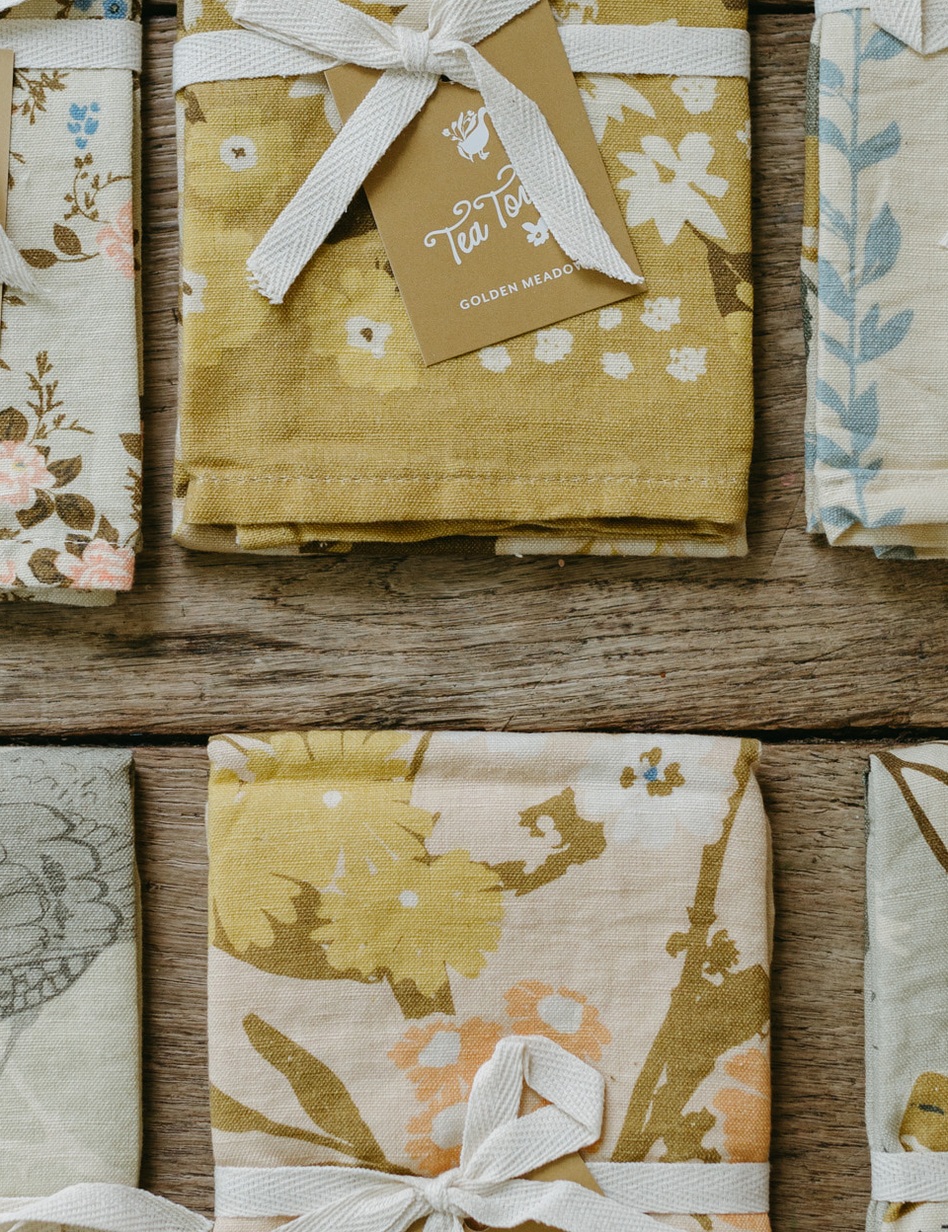
For our tea towels, we tested several color swatches and fabric samples to ensure the final version was accurate and felt harmonious with the other items in the collection.
Ask for Feedback and Adjust
It’s time to share our designs with individuals we trust, and to ask for their honest thoughts through a simple survey or direct feedback, either in person or via email.
We’re open to critique and excited to see what resonates with others, knowing an outside perspective can bring valuable clarity or highlight a needed adjustment.
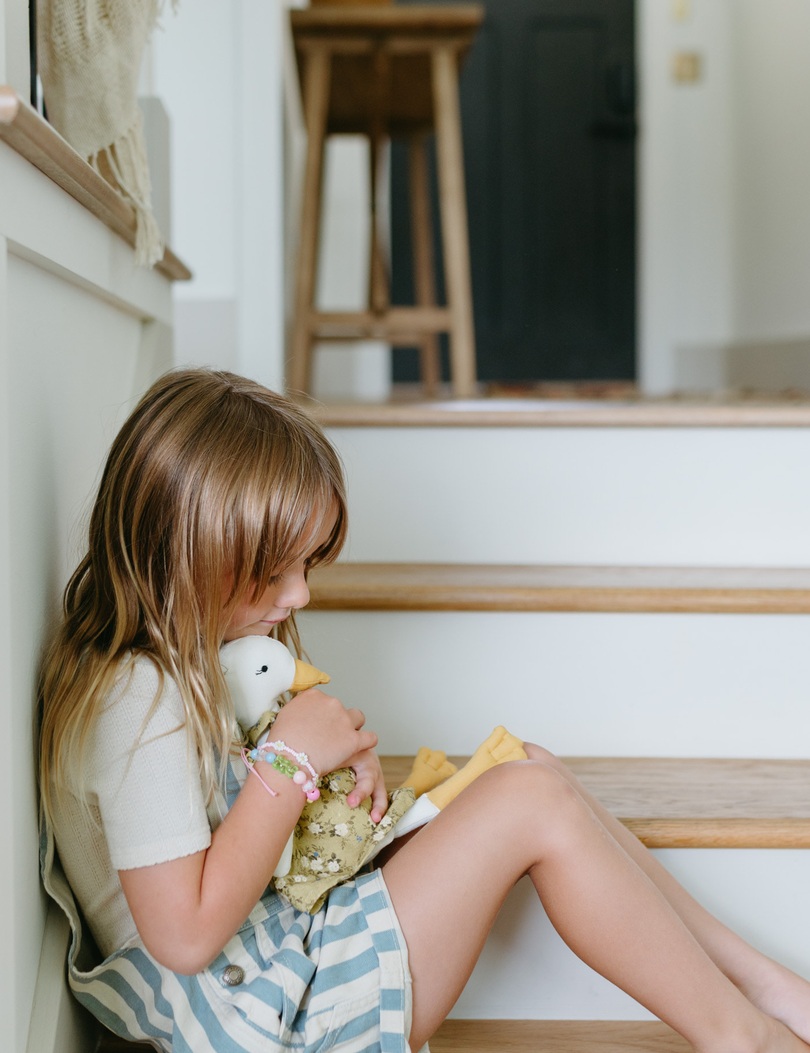
When we were creating Birdie, our softie duck doll, we had our kids play-test it. They told us exactly what changes they wanted to see and didn’t hold back! Birdie has eyelashes and a cute little tail, thanks to their input.
Find the Right Manufacturer
Once we finalize our designs, it’s time to find our manufacturer. Depending on the type of product we’re making, the vendor search may involve extensive googling or comparing traditional manufacturers with print-on-demand suppliers. Many countries have manufacturing specialties, so this is where we start our research and narrow down the field.
We explore vendor marketplaces like Alibaba to see examples of similar products, reviews, and minimum requirements. We look for established manufacturers with positive reviews, images of their work, and materials, pricing, and minimums that align with our goals.
With a solid list of potential vendors, we’re ready to start the conversation. But before emailing them our art files, timeline details, or requesting a quote, we send them twenty specific questions. These questions help us vet each manufacturer and determine their quality standards, as well as notice potential red flags.
Questions We Ask Every Manufacturer
- Where is your factory located?
- Is your facility family-run, privately owned, or corporate?
- How long have you been in business?
- What other brands have you manufactured for?
- What are your core product specialties?
- What materials do you work with most often?
- What are your minimum order quantities (MOQs)?
- What are your price breaks at 1K, 2K, and 5K quantities?
- Do you offer custom packaging, or do we need a separate vendor?
- Can you share examples of similar items you’ve made before?
- Can you do Pantone matching for custom colors?
- What’s your typical production timeline once a product order (PO) is placed?
- Are there factory closures or holidays we should plan around?
- Do you offer samples? What are the costs and lead times?
- What are your payment terms (deposit, final balance, etc.)?
- What shipping methods do you use (air/ocean/courier)?
- Do you handle customs clearance, or do we?
- Are you willing to sign a non-disclosure agreement (NDA)?
- What certifications or testing can you provide (CPSIA, etc.)?
- What’s your preferred method of communication (email, WhatsApp, calls)?
We send this in one email, and, if we don’t hear back, that’s our answer. If the manufacturer responds without reading, we move on. If they copy and paste “yes, we can do it” twenty times, we definitely move on.
A few other red flags we look out for include slow or evasive replies, pressure for a purchase order before sending samples, and a lack of willingness to sign a non-disclosure agreement.
We’ve found that the manufacturers worth working with answer the twenty questions above and also ask us questions in return.
Once we’ve contacted ten to fifteen manufacturers, we narrow down our list to our top three to four vendors based on responsiveness, clarity, and fit.
No matter how great a manufacturer seems, we never send artwork before they’ve signed our non-disclosure agreement.
Prototype and Test
Now it’s time to work with our top manufacturers to prototype and test our designs. We order physical samples to evaluate how our designs translate into actual products, considering everything from colors and materials to print quality and overall feel.
Prototyping provides an opportunity to see how designs look in real life and to make any necessary adjustments before final production. We can catch design inconsistencies, test functionality and fit, validate packaging experience, and ensure the product aligns with our quality, aesthetic, and brand values.
This can be time-consuming, so we allow ourselves margin for several rounds of samples and keep fine-tuning, even when it’s tempting to say, “This is fine.”
We began developing our Linen Flower Press in November, 2024, with the goal of having it ready for our Summer 2025 shop launch. However, it took nine months and three full sample rounds, with multiple design tweaks in between, to get each detail just right.
Our first round of sample reviews focused on refining the design, foil color, linen selection, and general construction. The second round was closer to our vision, but the strap material, paper finish, and blotting page count still needed adjustments. Our final sample round allowed us to fine-tune the strap color and length, the instruction sheet, and the packaging, as well as a few additional details.
It was a slow and collaborative process, but the final product was worth it. Take a peek at the flower press at Flowerie!
Finalize Designs for Production
After testing our prototypes, we focus on preparing the design files for production. This stage is all about refining small details, like adjusting pattern sizes or ensuring colors feel cohesive.
Once the designs are finalized, we hand everything over to our manufacturers.
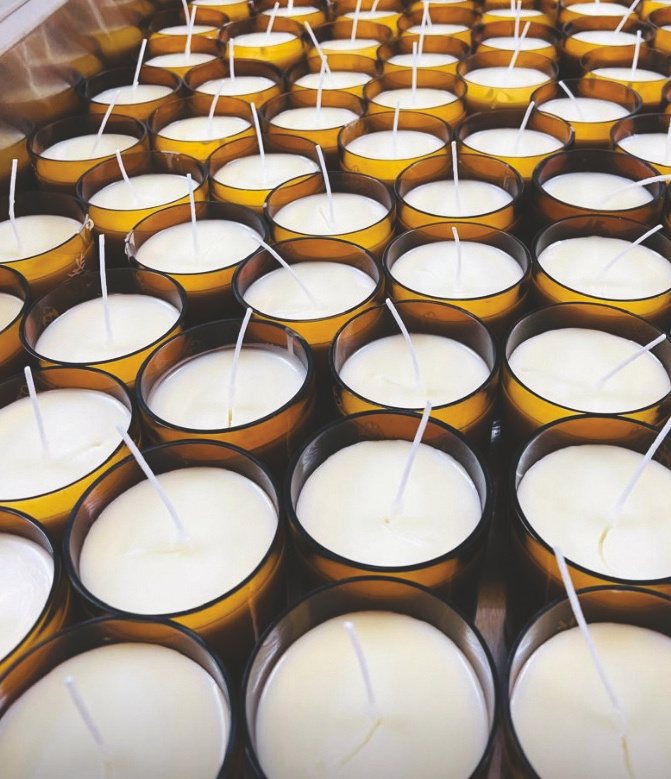
For The Meadow candle, our production partner in India kept us in the loop every step of the way, sending photos of the glass-blowing process, etching samples, and wax-pouring stages. As our partner, they went above and beyond to ensure we got the candle vessel of our dreams: real amber glass made with natural, non-toxic materials like silica, soda ash, and limestone. And this glass is blown instead of molded, giving each piece a handcrafted quality.
The glass actually has to be broken and melted several times during the process to remove bubbles. Who would have thought?
Create an Unboxing Experience
Packaging is an integral part of our product experience, as it sets the tone before the product is even opened. We carefully consider each product’s packaging materials, colors, and textures, as well as how they reflect our brand’s identity and convey the feel of our collection as a whole.
For The Meadow candle, our first box samples were functional but lacked the weight and presence we wanted. We went back and forth between a standard box and a fully custom luxury box. The standard option felt too flimsy, but the luxury box added time, complexity, and significant cost. In the end, we decided the extra cost was worth it. We pushed ahead with a custom rigid box with a hand-applied paper finish, embossed foil details, and a subtle printed motif. It was an investment, but it ensured the candle would feel as special in hand as it did in concept. And when we consider our retailers, beautiful, giftable packaging is key! We want our products to look irresistible when on display in boutiques.
Even with those decisions made, there were still trade-offs. To keep costs reasonable, we had to limit foil printing to two sides, choose a single-color paper, and remove decorative elements from the interior. These were hard calls, but they made it possible to create a final product that felt high-end without breaking pricing expectations.
Three simple steps help us create a true unboxing experience to pair with each product we make:
- Start With the End in Mind: We picture how our customers will interact with our goods from the moment the box arrives. Something as simple as branded packaging tape can set the scene before the customer even opens the box and can increase their anticipation.
- Tackle Practical Challenges: We think through logistics early in our design phase and ensure our products are functional and easy to ship.
- Add Personal Touches: We look for ways to add thoughtful details that surprise and delight, like a beautiful “thank you” postcard or a patterned ribbon.
We’ve carefully selected packing materials and protocols that are simple but elevated: flat goods wrapped in brown paper and sealed with a gold Birdie label, boxes sealed with custom Flowerie packing tape, and a lovely postcard tucked into every order.
Share the Product Line
In our Flowerie shop, we introduce new products with each season in addition to our favorites year-round. But our very first product launch was a small-batch collection, which allowed us to refine our designs, build excitement, and learn from our customers before committing to larger production runs.
For our Sneak Peek Pop Up Shop, the year before officially launching Flowerie, we intentionally produced just a hundred units of each product so we could test, learn, and refine.
There’s something beautiful about seeing a product and knowing it began with an idea scribbled onto a page. Handcrafted products are rich with story and personal, a seed of an idea in full bloom.
The next time you step into a shop, pause and take a moment to notice. Whose sketchbook held this pattern? Whose hands drew the first curve of this vase? Whose eyes meticulously scanned every detail before files were submitted for approval?
Perhaps they’re yours, as you develop your very own product line.
If you’d like to learn more about creating products, from production timelines and product shot lists, to pricing toolkits and more, we’d love to welcome you inside The Greenhouse, our monthly newsletter. We’re learning real-time as we grow our shop, Flowerie, and sharing each discovery along the way.
Grow with us.
Wanting More?
This story comes from Volume 4 of Pattern Magazine, Expansion & Exposure. The whole spring issue, with every story and photograph, is at bonniechristine.com/patternmagazine.
Get The Pattern Post in your inbox
The week’s news from the creative industry, with my spin on it, every Tuesday. Free, and yours to pause whenever you like.
We honor your email. We will never sell your information, for any reason.